Invoicing
Electronic Payment Receipt (REP): when to issue it, how to use it, and mistakes to avoid
A practical guide to REP in Costa Rica, including when it applies, how it relates to credit sales, and the operational mistakes that create confusion.
Author
Kontafico team
Updated
4/2/2026
Reviewed
Editorial and tax context
Informational content for Costa Rica. Review specific tax or accounting decisions with your accountant before filing.
Quick answer
A practical guide to REP in Costa Rica, including when it applies, how it relates to credit sales, and the operational mistakes that create confusion.
What REP is and when it should be issued
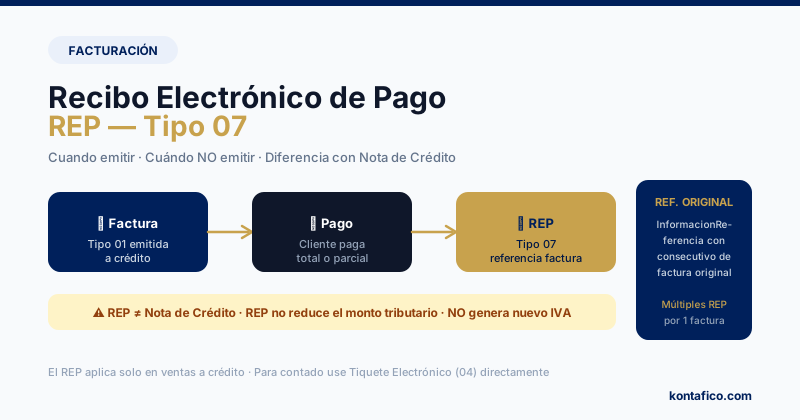
The Electronic Payment Receipt documents the payment of a previously issued invoice, especially in credit-sale workflows.
It is not a replacement for the original invoice. Instead, it complements the document trail by confirming payment events tied to that original sale.
Using REP correctly helps keep customer accounts, audit trails, and tax support aligned.
How REP fits into daily collections
When you sell on credit and later receive payment, REP allows you to document that collection event cleanly.
This matters for companies that need a reliable account receivable history and want fewer mismatches between invoices, bank movements, and customer balances.
Teams should define a clear rule for when collections staff, finance, or administration issue the REP.
Typical mistakes around REP
One common mistake is treating REP as optional when the business process clearly requires payment traceability.
Another is issuing it with incomplete information or failing to link it properly to the original invoice.
Manual collection tracking also creates delays and errors when the accounting team must reconstruct what happened later.
Best practices for a cleaner process
Standardize who issues REP, when it is issued, and what supporting payment evidence is required.
Keep customer balances updated and reconcile collections against bank deposits and the open invoice list.
The process works much better when the invoice, payment, and REP all live inside the same system.
Why businesses benefit from getting this right
A clear REP process improves collections control and reduces disputes about whether an invoice is still open or already paid.
It also helps accountants close periods with better supporting records and fewer manual explanations.
For growing businesses, this becomes increasingly important as the number of invoices and partial payments grows.
REP decision table
Use this to decide when REP should be part of the collection workflow.
| Scenario | REP relevance | Operational note |
|---|---|---|
| Credit sale | High | Issue REP when payment is received and match it to the invoice. |
| Immediate cash sale | Low | The original document usually reflects the payment event. |
| Partial payment | High | Track amount, date and balance pending by invoice. |
Manage collections with the right document trail
Keep invoices, collections, and related documents aligned so your accounts receivable process stays clear.
Try KontaficoFrequently asked questions
Is REP the same as the original invoice?
No. The invoice documents the sale, while REP documents the payment received for that prior invoice.
When is REP most useful?
It is especially useful in credit-sale workflows where payment happens after the invoice is issued and the company needs a clean payment trail.
Can Kontafico help with REP issuance?
Yes. Kontafico includes the document flows needed for Costa Rican electronic invoicing, including payment-related follow-up.