VAT
D-104 VAT in Costa Rica: a complete guide to filing correctly
Everything you need to understand monthly VAT filing in Costa Rica, including common rates, input VAT credit, due dates, and practical filing habits.
Author
Kontafico team
Updated
4/2/2026
Reviewed
Editorial and tax context
Informational content for Costa Rica. Review specific tax or accounting decisions with your accountant before filing.
Quick answer
Everything you need to understand monthly VAT filing in Costa Rica, including common rates, input VAT credit, due dates, and practical filing habits.
What the D-104 return covers
The D-104 is the monthly VAT return used to report taxable sales, input VAT, exempt transactions, and the resulting balance owed or in favor.
It is one of the most frequent tax obligations for active businesses in Costa Rica, which means process discipline matters more than last-minute effort.
A clean D-104 depends on accurate invoices, correctly categorized expenses, and consistent VAT treatment throughout the month.
Common VAT rates and credits
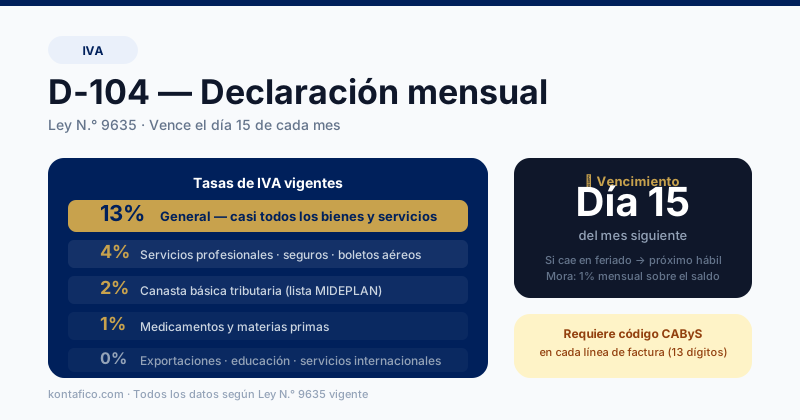
The standard VAT rate is 13%, but there are reduced rates and special cases depending on the industry and the type of transaction.
Input VAT credit generally requires valid support, a business purpose, and the correct document trail. Not every expense automatically qualifies.
The monthly close is easier when the accounting system already tags each transaction with the correct VAT treatment.
Monthly deadlines and payment timing
The D-104 is typically due on the 15th of each month for the prior calendar month.
Even if you manage to file on time, paying late still generates interest and may trigger additional penalties.
The safest process is to close the month early, review exceptions with your accountant, and file before the deadline day itself.
Frequent mistakes businesses make
A common mistake is mixing personal and business expenses, then trying to claim input VAT credit without clear support.
Another one is relying on spreadsheets and manual sums instead of reconciling invoices and expenses against actual records.
Companies also get into trouble when they use the wrong rate, omit transactions, or fail to review rejected documents.
How to keep D-104 ready every month
Record invoices and expenses in real time rather than rebuilding the month at the end.
Reconcile your sales, purchases, and bank activity so the VAT return reflects the same economic reality shown elsewhere in the books.
Use reminders and a fixed monthly close routine so the filing deadline becomes predictable and boring instead of stressful.
D-104 monthly preparation table
Use this as an operational checklist before your monthly VAT filing.
| Input | What to verify | Kontafico connection |
|---|---|---|
| Issued invoices | Taxable, exempt and cancelled documents are correctly classified. | Electronic invoicing and sales reports. |
| Received invoices | Supplier documents have receiver message status and correct VAT treatment. | Received invoices and expense control. |
| Adjustments | Credit/debit notes match the original document and period. | Document traceability by customer or supplier. |
Have VAT ready by the 15th without rushing
Keep invoices, expenses, and monthly close tasks organized so VAT filing becomes a review process instead of a reconstruction project.
Try Kontafico freeFrequently asked questions
Can I file D-104 on time and pay later?
Yes, but the unpaid balance still generates late interest and may expose you to additional sanctions. Filing on time is better than not filing, but it does not erase the payment obligation.
Does every expense generate input VAT credit?
No. The expense must be properly supported and tied to the business activity. Your accountant should review doubtful cases.
Can Kontafico keep the monthly VAT close organized?
Yes. Kontafico centralizes invoices, expenses, and categorization so the VAT return can be reviewed from cleaner source data.